Everyone "knows" Atlantis. Almost no one has read the only document it comes from. So here it is —
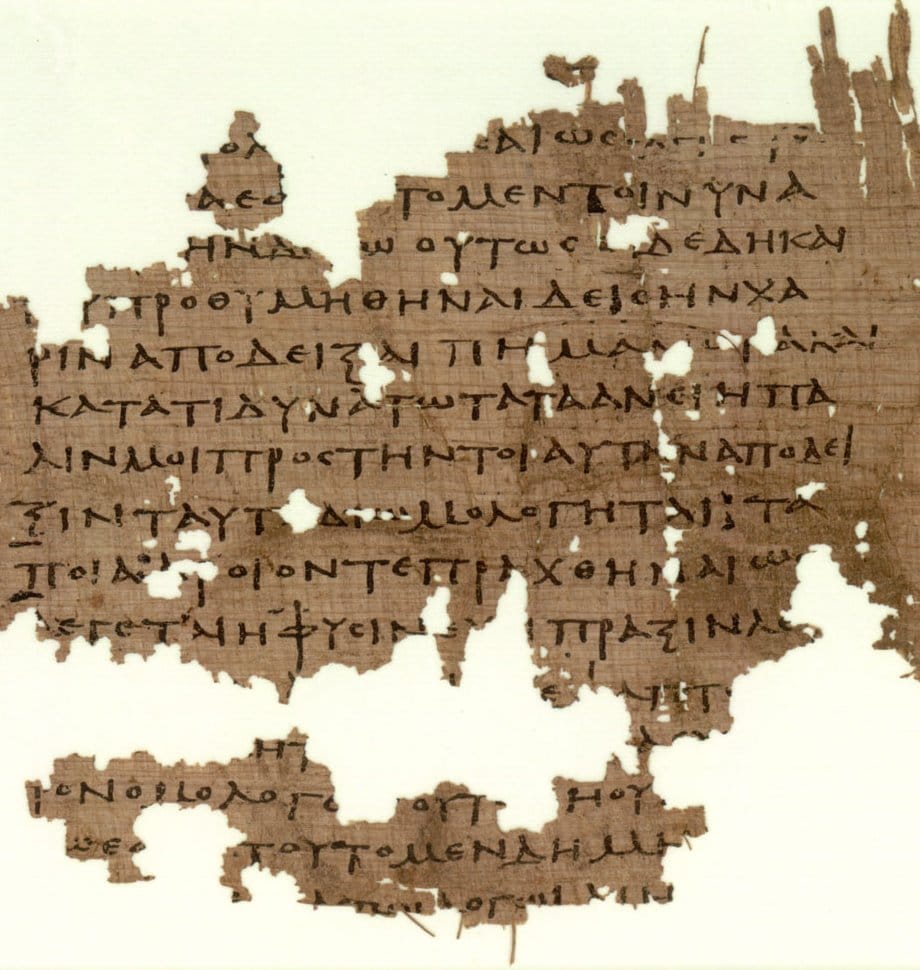
Plato's own words, in two dialogues written around 360 BCE, with plain-language notes. Read them and
a striking thing becomes clear: this reads less like a survivor's report and more like a philosopher's
carefully built parable.
Plato doesn't claim to have found Atlantis. He frames it as a tale the Athenian statesman Solon heard
from Egyptian priests at Saïs, passed down through Critias's family — a chain of retellings, not a
record.
“…in those days the Atlantic was navigable; and there was an island situated in front of the straits
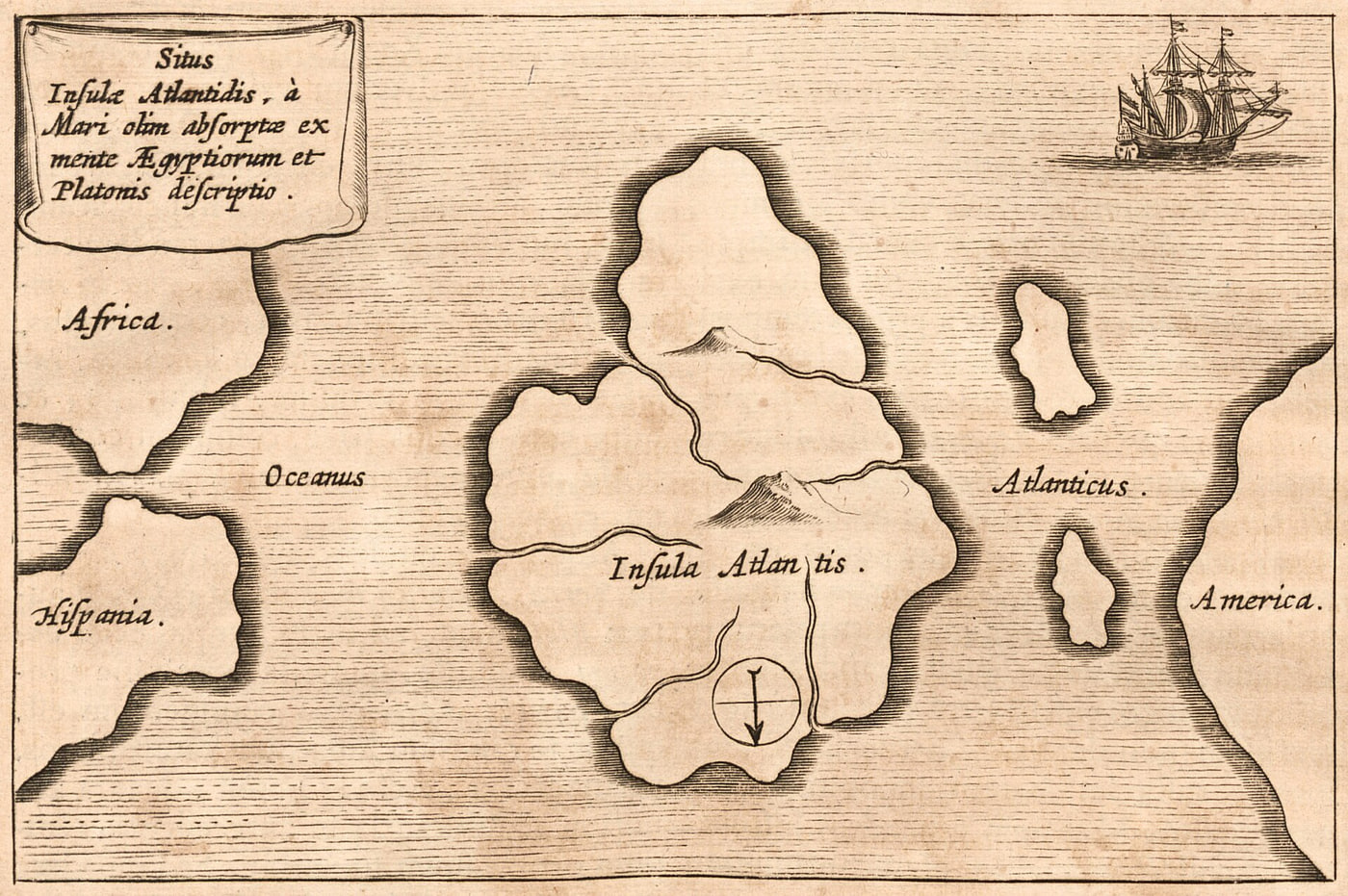
which are by you called the Pillars of Heracles; the island was larger than Libya and Asia put together…”
Timaeus 24e–25aThe location (beyond Gibraltar), the size, and the scale of the empire — all stated up front.
“But afterwards there occurred violent earthquakes and floods; and in a single day and night of
misfortune… the island of Atlantis… disappeared in the depths of the sea.”
Timaeus 25c–dThe destruction: total, sudden, and — crucially — in a single day and night.
In the Critias, Plato describes Atlantis in loving, almost architectural detail — rings of land and
water, canals, a temple sheathed in metal. The precision is part of why it feels real; it is also
exactly what a philosopher building an allegory would supply.
“…breaking the ground, inclosed the hill in which she dwelt all round, making alternate zones of sea and
land larger and smaller, encircling one another; there were two of land and three of water.”
Critias 113d–eThe signature image: alternating rings of sea and land — two of land, three of water.
“All the outside of the temple… they covered with silver, and the pinnacles with gold… the roof was of
ivory, curiously wrought everywhere with gold and silver and orichalcum.”
Critias 116d–eThe temple of Poseidon, clad in silver, gold, ivory — and the mysterious metal orichalcum.
Here is the tell. Plato's Atlantis is destroyed not by bad luck but by corruption — when the
divine part of its people faded and greed took over, Zeus moved to punish them. The dialogue breaks off
mid-sentence, just as Zeus calls the gods together. Atlantis exists to make a moral argument.
“…when the divine portion began to fade away… and became diluted too often and too much with the mortal
admixture… they then, being unable to bear their fortune, behaved unseemly.”
Critias 121bThe moral engine of the parable — and the text famously stops here, unfinished.
These are the load-bearing facts about the text itself, each tested and sourced.
Proven
Plato is the sole ancient source for Atlantis
The Atlantis story appears in exactly two of Plato’s dialogues, the Timaeus and the Critias (c. 360 BCE). No independent ancient source predates or corroborates it. The often-cited Hellanicus wrote about the daughters of Atlas, not a sunken island; Crantor merely commented on Plato.
Plato places Atlantis beyond the Pillars of Heracles, "larger than Libya and Asia"
Timaeus (Jowett): “there was an island situated in front of the straits which are by you called the Pillars of Heracles; the island was larger than Libya and Asia put together.” Note: standard translations read “Asia”; Britannica glosses “Asia Minor” — an interpretation difference, not a factual conflict.
Plato dates Atlantis to ~9,000 years before Solon (≈9600 BCE)
The figure is anchored to Solon’s visit to Egypt (~600 BCE), recounted by an Egyptian priest at Saïs — not “9,000 years before Plato.” Critias: “nine thousand was the sum of years which had elapsed since the war … between those who dwelt outside the pillars of Heracles.”
Verified 3-0. Common popular summaries misstate the anchor by ~200 years.
Plato says Atlantis sank "in a single day and night"
Timaeus 25c–d (Jowett): “there occurred violent earthquakes and floods; and in a single day and night of misfortune … the island of Atlantis … disappeared in the depths of the sea.” Two independent scholarly translations agree on the wording.
Scholarly consensus: Atlantis is a Platonic invention, an allegory
Present-day philologists and classicists agree the story is fictional, with Plato as its sole inventor — a philosophical foil for his ideal state. Vidal-Naquet maintained “Plato made Atlantis up.”
Verified 3-0 (bare consensus claim 2-1). A claim that Aristotle himself said this was REFUTED 0-3 and excluded.
The most fascinating thing about Atlantis isn't the island — it's what people kept doing with it. The
idea was revived, racialized, weaponized, prophesied, and finally hunted with sonar. The story below is
the real one.
In the Timaeus and Critias, Plato uses a fabled island empire — vast, proud, and ultimately punished — as a foil for his ideal state. It is the first and only ancient account.
Antiquity
Even the ancients argued
Plato’s followers debated whether the tale was history or fiction. The story circulated, but no independent ancient source ever corroborated the island’s existence.
1882
Donnelly makes it "real"
Ignatius Donnelly’s Atlantis: The Antediluvian World reframes the parable as literal history and the cradle of all civilisation. The modern "real Atlantis" movement is born — and with it, pseudoarchaeology.
1888
Blavatsky racializes it
Theosophy’s The Secret Doctrine recasts Atlanteans as a "root race." A literary myth becomes an occult cosmology — one historians link to later antisemitism.
1920s–1945
The Nazi appropriation
Thule Society and Ahnenerbe ideologues fold Atlantis/Hyperborea into Aryan-origin myth. The story’s darkest chapter: a tale about hubris weaponized into one about supremacy.
1930s–60s
Cayce and the "sleeping prophet"
Edgar Cayce’s readings predict Atlantis will rise near Bimini "in 1968 or 1969." In 1968 the natural "Bimini Road" is found and the prophecy is declared symbolically fulfilled.
1960s–today
The scientific search — and its limits
Marinatos ties Atlantis to the Minoan eruption; later researchers propose Spartel, Doñana, the Richat Structure. Each is tested; each fails. Mainstream scholarship holds firm: Atlantis is Plato’s invention.